
I remember when, as young parents of small children, we felt God leading us to an overseas ministry. Dear Husband’s parents were well aware of the physical dangers of taking young children to a third-world country. They were aware that their grandchildren would grow up without them. They knew the living conditions would be less than ideal. They could have pointed all this out. They could have guilted us. They could have pressured us. Instead, they supported us in every way, selflessly relinquishing their rights as parents and grandparents. Yet, how often have you and I made our opinions quite clear when our adult kids make decisions that aren’t nearly as life-changing as moving their family across the globe?!

Have you ever suddenly realized that your ‘baby’ is growing up and doesn’t need you like he did as a child? We parents, especially moms, all have to face the fact that our relationships shift as our kids mature. We have to step back and allow them to make decisions, learn, and grow. We know this happens in stages. We step back in small steps when they’re little- ‘yes, you can pick out your own outfit today.’ We take bigger steps back as they enter their teen years, adding responsibility with freedom. When they graduate high school, we shift into advisors and encouragers. But what happens when we think we know what our adult kids should do? What happens when we’re sure they shouldn’t do something? Do we pressure, guilt-trip, or demand? We’re limiting this discussion to areas that we simply have an opinion about, not things that are clearly morally wrong. We aren’t talking about when the young person is engaging in sinful, risky, or dangerous behavior. When an adult child is violating God’s rules, parents are obligated to speak the truth lovingly. If parents condone or enable their adult kids’ sinful behavior, they are setting themselves up for bitter consequences. (Eli, the priest, was judged for enabling his sons’ sins in 1 Samuel 3:12-14). If we don’t condone or enable, but our kids continue in sin, it’s not on us.

Even the most blessed of all women fell into the trap of trying to manage her adult son. Mary was chosen out of all the women who ever lived to bear and nurture God’s Son. She is a role model for every godly mother. Her immediate and sincere obedience to the angel’s message that she would become pregnant by the Holy Spirit showed her utter trust in God. It was all beyond her ability to understand, but she staked her future on it. She sought the company of an older woman, Elizabeth, who was mature in her faith and shared her heart with her. She quietly endured the rejection of her beloved when he misunderstood her pregnancy. She listened and watched as miracles unfolded around her. And she didn’t forget these displays of God’s hand- she thought about them and recalled them often to carry her through the hard things. As Jesus grew, she appreciated his obedience and respect and leaned on him heavily after her dear husband died.
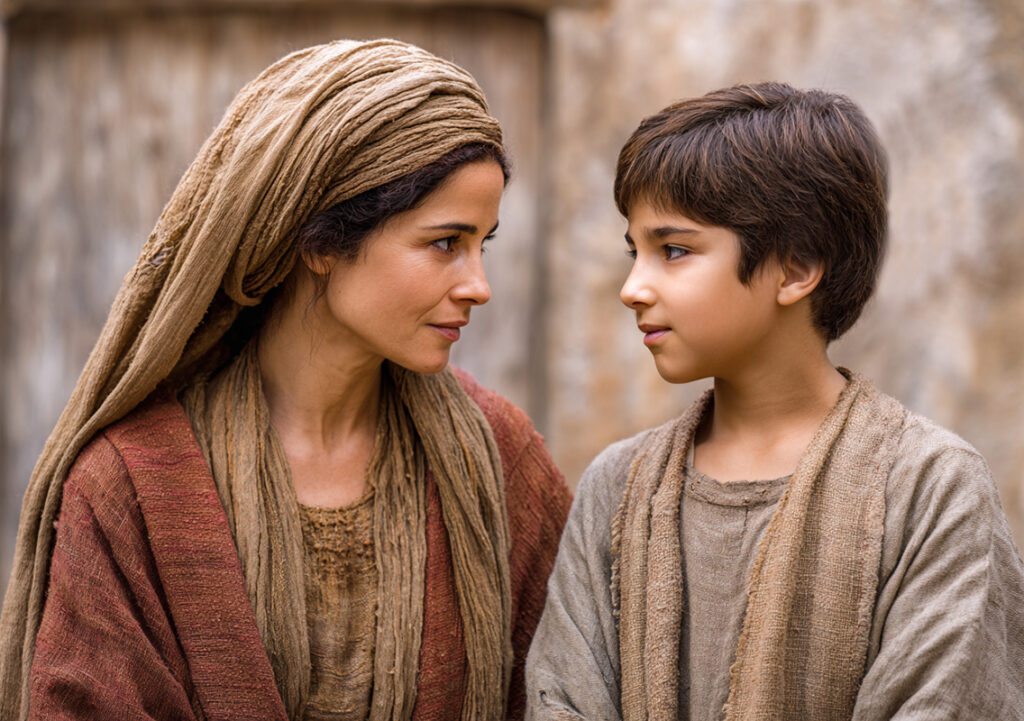
But she didn’t always understand her Son’s actions- ‘Why did you treat us this way?’ she questioned accusingly when he stayed behind in the Temple to reason with the rabbis instead of going home with his parents after Passover. He had emerged from childhood into spiritual adulthood, yet she had failed to recognize it. Years later, when her son was an adult, she pressured him to step in and fix the problem of a shortage of wine at a friend’s wedding. Being already aware of his miraculous powers, she wanted him to do a miracle on demand. He had to remind her that he wasn’t a genie at her beck and call, but that he operated only on his heavenly Father’s timeline. She deferred to him and said no more to him, but in an exiting remark to the servants, she clearly had expectations.
Some time later, she heard he was pressed by crowds so much that he had no time to even eat. So she “went to take charge of him, for they said, ‘He is out of his mind.’” (Mark 3:21) She thought she knew better than he did what was good for him, thereby showing a lack of respect. Jesus had to ignore her attempts to force him to come home. His priority was obeying God, even if it meant disappointing his mother. But she accepted his refusal and kept believing in him. There’s no other record of her trying to boss her adult son.

She bravely withstood the unbelief of her other sons and the townspeople. She was steadfast in her faith in her Son, even when he was dying a criminal’s death. Not withstanding her own broken heart, she stood with him through agonizing hours until his last breath. In loving concern for her, some of Jesus’ last words from the cross were instructions for her welfare after his death. She must have rejoiced more than the others when she met him again after he came back to life! She remained faithful after her Son left for Heaven by often meeting with the believers for prayer. Among that group were her other sons who had finally been won over by Jesus’ resurrection. She had lost a Son, but gained other sons. One of her sons became one of the leaders of the faith community. Her humble, gracious, sometimes imperfect faith has been an example to believers for two thousand years.
As mothers, let’s beware of trying to correct, pressure, or compel our adult kids who are doing their best to obey God. Let’s respect their right to find God’s will for themselves. Like Mary, we don’t always know what God’s best for them is!

Liked the family boating picture. So many fun memories.
Stepping back, but available, a good plan.
Listen and watch.
Respect their their right to find God’s will.
Looks good on paper. Prayer needed to
live it out .
Yes, indeed!