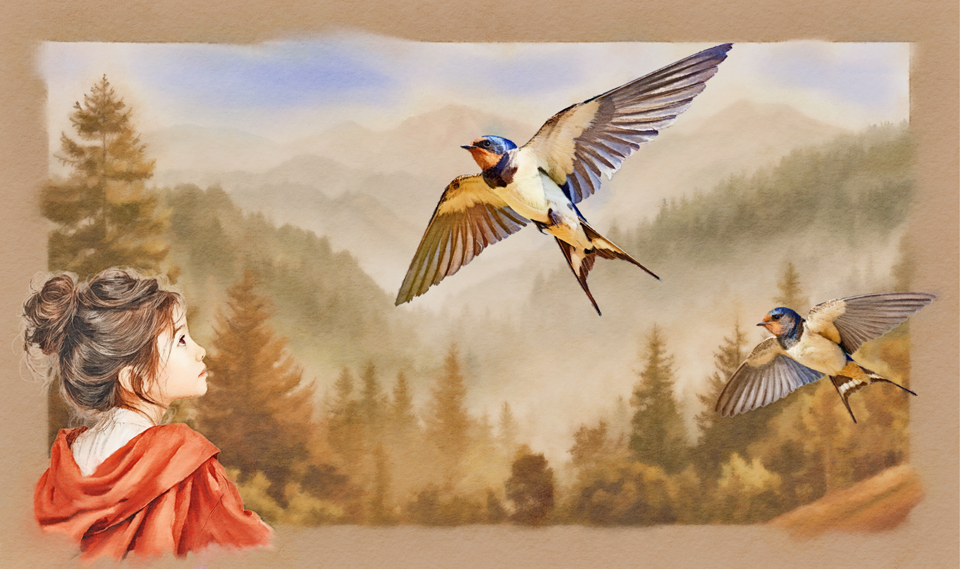
 Have you ever felt a bit dry? Disconnected to your Source? Yesterday, I felt something was missing. My prayers weren’t spontaneously rising to my Maker. My soul felt shriveled. I prayed, “Lord, bring me close. And please, I hope You don’t have to use trouble to do it!” Shortly after, I heard some swallows giggling and chattering in their flight above me. My first thought was to give thanks for their cheerful sounds. Ah, see how God kindly answered my aching prayer! Hearing his creatures raised my heart to their Creator in praise. Later, I was talking to dear Husband about how thanking God draws us close to him. He pointed out how often the Scriptures connect praise with closeness to God. So I’m learning that when I feel distant from the Lord, it’s time to start thanking him for big and small things. Praise brings us into his dear Presence because we are thinking about his magnificence. Our humble gratitude acknowledges him as the Source of everything good and ushers us into God’s presence. When we give thanks, we immediately experience his closeness.
“Enter his gates with thanksgiving; go into his courts with praise. Give thanks to him and praise his name.” Psalm 100:4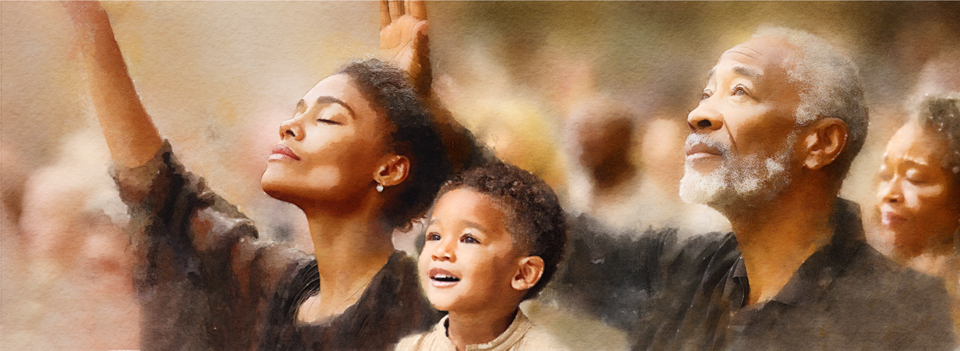
We can praise and thank God in words when we’re alone. And we can praise and thank him in words set to music in our hearts or out loud just between us and God. There’s yet another dimension to coming close to God. We can do it together with others! Praise and thanks bring us into the presence of God. As we kneel before him, we receive the blessing of his closeness, whether alone or together.
David was so good at expressing his gratitude to God. (He was also good at expressing his hurts in a starkly honest manner.) He loved music as a way to express his heartfelt thankfulness and his overflowing praise. I’m so glad we have the record of David’s words, even tho most of the melodies have been lost. For him, it wasn’t just personal worship to God; he knew it was of great importance that the people gather to worship God together through music. So he made a plan for certain groups of priests to sing, while other groups of priests played musical instruments when the people gathered. Brass, percussion, and strings were part of worship. The singers were often divided into two choirs with directors. One choir began and the other answered. The songs were designed to praise and thank God, drawing the hearts of the people to God in humble worship.
“David appointed the following Levites to lead the people in worship before the Ark of the Lord—to invoke his blessings, to give thanks, and to praise the Lord, the God of Israel.” 1 Chronicles 16:4
This is just my opinion, but it looks like worshiping God together is: 1 part thanks, 1 part praise, 1 part asking
“And each morning and evening they [the assigned priests] stood before the Lord to sing songs of thanks and praise to him.” 1 Chronicles 23:30
In the time of David’s son, Solomon, the finished Temple was dedicated to God.
“The trumpeters and musicians joined in unison to give praise and thanks to the Lord. Accompanied by trumpets, cymbals and other instruments, the singers raised their voices in praise to the Lord and sang: “He is good; his love endures forever.” Then the temple of the Lord was filled with the cloud [of his Presence].“ 2 Chronicles 5:13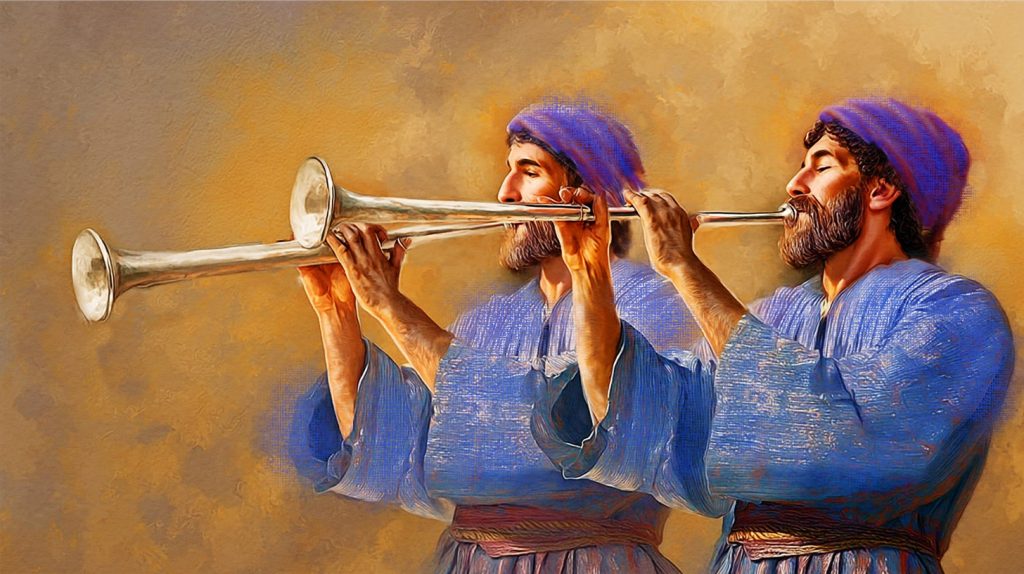
Generations later, even after deportations, the role of music in worship still endured. Nehemiah called for the priests to come to the dedication of the new wall around Jerusalem.
“For the dedication of the new wall of Jerusalem, the Levites throughout the land were asked to come to Jerusalem to assist in the ceremonies. They were to take part in the joyous occasion with their songs of thanksgiving and with the music of cymbals, harps, and lyres. . . The custom of having choir directors to lead the choirs in hymns of praise and thanksgiving to God began long ago in the days of David and Asaph.” Nehemiah 12:27, 46
So, for special occasions, for regular group worship, and for personal, daily meditation, giving thanks and praise in words or in words and music brings us into God’s presence.
Have you ever wondered if there’s a difference between praise and thanks? The two concepts certainly overlap, but they have slightly difference emphases. The two words are:
“Give praise = Halal: to praise; give thanks; cheer, extol
Give thanks = Yada: to express praise, give thanks, extol, make a public confession, make an admission:to praise is to speak of the excellence of someone or something; to give thanks has a focus on the gratitude of the speaker.” NIV Exhaustive Concordance Dictionary. Copyright © 2015 by Zondervan. I think this means that when we declare God’s attributes and actions we are praising [halal]. When we are grateful for his attributes and actions to us personally, we are thanking [yada]. For instance: “I praise you that you are a merciful God. I thank you for being merciful to me and saving me.”
“The Lord is my strength and shield. I trust him with all my heart. He helps me, and my heart is filled with joy. I burst out in songs of thanksgiving.” Psalm 28:7
“Make thankfulness your sacrifice to God,
and keep the vows you made to the Most High.
Then call on me when you are in trouble,
and I will rescue you,
and you will give me glory.” Psalm 50:14-15
“But giving thanks is a sacrifice that truly honors me. If you keep to my path, I will reveal to you the salvation of God.” Psalm 50:23
“Be thankful in all circumstances, for this is God’s will for you who belong to Christ Jesus.” 1 Thessalonians 5:18
Praise brings us into God’s presence where we sacrifice the offering of thankfulness. What a great theme for our lives, living close to our God.
.
Amen! Good thing we have God’s help for living close!