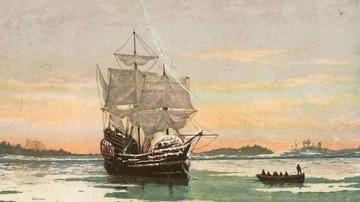
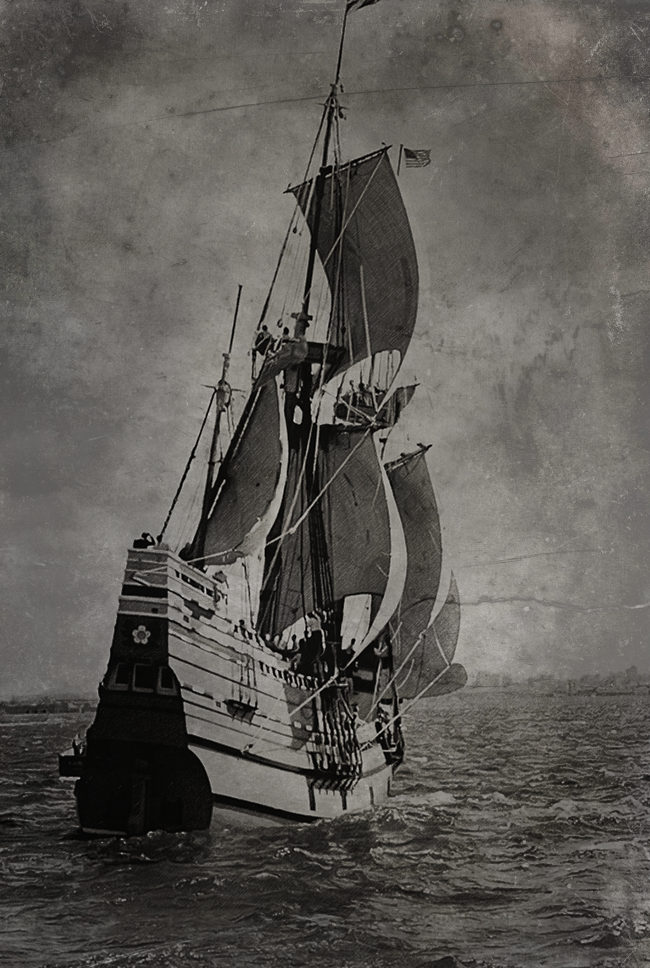
 A relative just texted me photos of falling snow outside her office window in Massechusetts, where she lives. Living in the moderate climate of the Pacific Northwest, I was shocked to think it was snowing already there. I have it so easy! This all made me think of the Puritans whose first arrival in the New World was anything but easy. They sited land near where my relative lives at this exact time of year. It was November 9th, but already winter in New England, in the year 1620. The Puritans then spent six weeks finding a suitable location to settle. A small party of men in an open boat made several explorations from the ship on sea and land, braving harsh weather to search for the best spot.
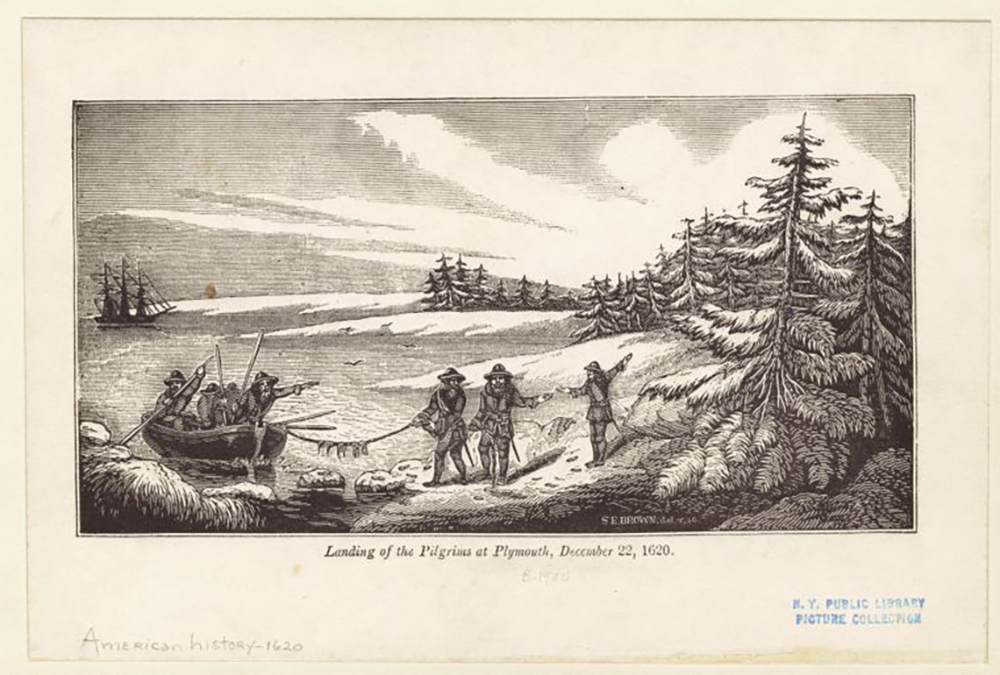
Meanwhile, the rest of the group stayed on the ship anchored in a bay. By the time a place was found and the first rudimentary building was completed, the Puritans had been on the crowded ship for six months! They had left Holland in July and most of them didn’t go ashore in the New World until January. They had experienced one delay after another before they finally left England. Then 66 days en route. Plus six weeks seeking the best place to settle. Six months of deprivation. Cold, damp, cramped living space with not enough food, fresh air, or sun. By December, sickness had begun to spread among the passengers and then the crew. The first building finished in January was immediately used to house the sick and dying.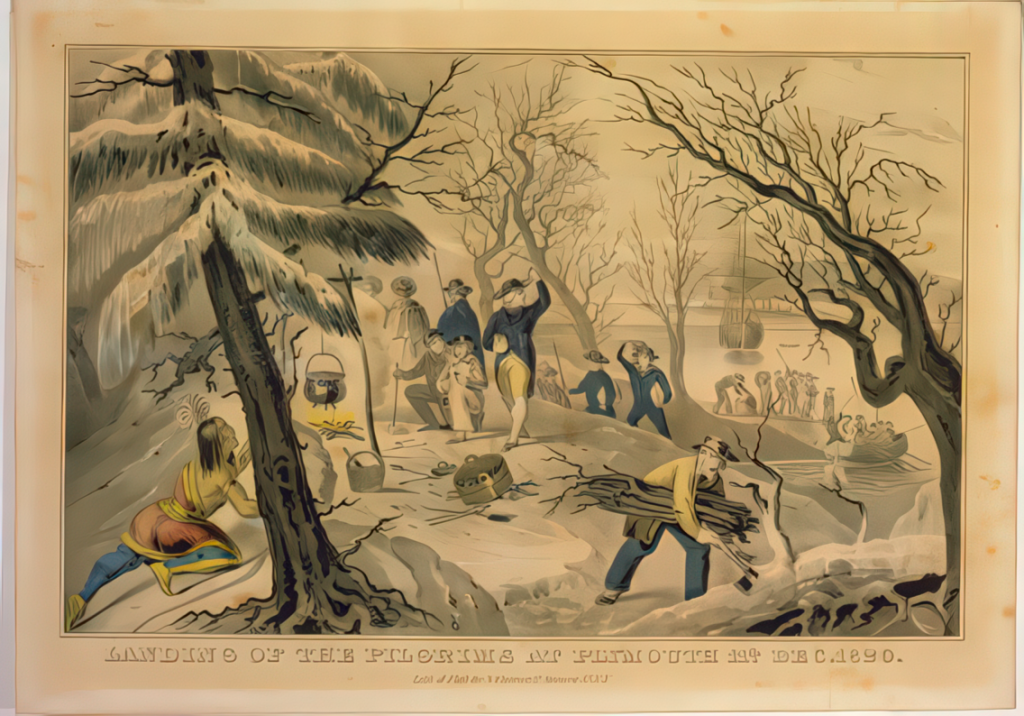
The following account of the desperate conditions the Puritans faced upon their arrival in Plymouth deeply impressed me. How did they maintain their faith and their care for others in spite of alarming circumstances? Here is an eyewitness account of those dark days. (I have modernized the old English)
“But that which was most sad and lamentable was, that in 2 or 3 months time half of their company died, especially in January and February, being the depth of winter, and without houses and other comforts; being infected with scurvy and other diseases, which this long voyage and their inaccomodate condition had brought upon them; so as there died some times 2 or 3 of a day; that of 100 and odd persons, scarce 50 remained.
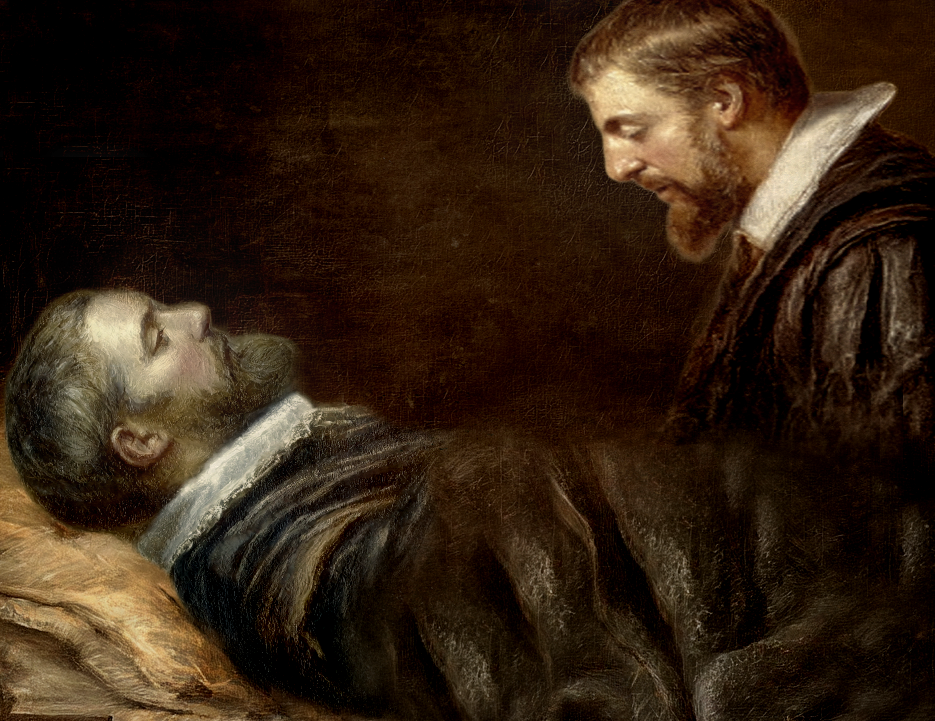
And of these in the time of most distress, there was but 6 or 7 sound [well] persons, who, to their great commendations be it spoken, spared no pains, night nor day, but with abundance of toil and hazard of their own health, fetched them wood, made them fires, dressed them meat, made their beds, washed their loathsome clothes, clothed and unclothed them; in a word, did all the the homely and necessary offices for them which dainty and quesie stomachs cannot endure to hear named; and all this willingly and cheerfully, without any grudging in the least, showing herein their true love unto their friends and brothers. A rare example and worthy to be remembered. Two of these were … their reverend Elder and … their Captain and military commander, unto whom myself and many others, were much beholden in our low and sick condition. And yet the Lord so upheld these persons, as in this general calamity they were not at all infected either with sickness or lameness.
And what I have said of these, I may say of many others who died in this general visitation, others yet living, the while they had health, yes, or any strength continuing, they were not wanting to that had need of them. And I doubt not but their recompense is with the Lord.
But I may not here pass by another remarkable passage not to be forgotten. As this calamity fell among the passengers that were to be left here to plant [the colony], and were hasted ashore and made to drink water, so that the seamen may have the more beer … the sickness began to fall amongst them also, so as almost half of their company died before they went away . . .
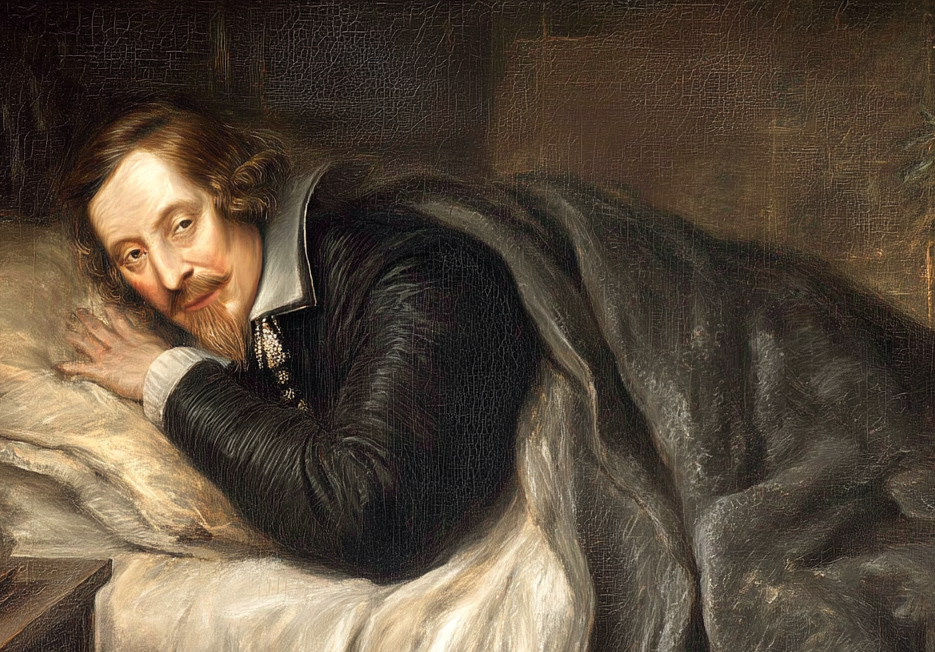
But now among his company [the crew] there was far another kind of behavior in this misery than amongst the passengers; for they that before had been good companions in drinking and jollity in the time of their health and welfare, began now to desert one another in this calamity, saying they would not hazard their lives for them, for they should be infected by coming to help them in their cabins, and so after die, would do little or nothing for them, but if they died, let them die. But such of the passengers as were yet aboard showed them what mercy they could, which made some of their hearts relent … a proud young man would often curse and scoff at the passengers; but when he grew weak, they had compassion on him and helped him; then he confessed he did not deserve it at their hands, he had abused them in word and deed. Oh! said he, you, I now see, show your love like Christians, indeed one to another, but we let one another lie and die like dogs…” William Bradford writing in his journal afterwards
“everyone will know that you are my disciples, if you love one another.” Jesus in John 13:35
So the Pilgrims cared for each other and also those who had been unkind to them. This generosity and kindness made a lasting impression on those who survived. Deep friendships among the Puritans were forged in the fires of disease. Even the crew noticed their kindness and expressed gratitude. I wonder if I would’ve been brave enough to help the sick, knowing the diseases were contagious and often fatal. Are you thinking of Covid? We were made to fear each other. Don’t get close to healthy people, much less the sick in order to protect yourself! But these Puritans took their lives in their hands to care for people they hardly knew. When it comes to costly sacrifice like this, we draw back. What will happen to me?! The risk is too great. I have a life to live. But the Bible teaches us a better, higher way to live and love.
“My command is this: Love each other as I have loved you. Greater love has no one than this: to lay down one’s life for one’s friends.” John 15:12-13. [Shortly afterwards, Jesus laid down his life for us.]
We may never have to die for others, but we do daily lay down our own preferences in order to serve our families, friends, and whoever comes into our lives. We meet their needs usually at our own expense. But the happiness and fulfillment our sacrifices bring far outweigh the inconveniences.

A young mother gets up in the night to nurse her baby. But the sweetness of her warm babe nestled up against her make up for lost sleep.
A father comes home from work hoping for a break, but his toddlers rush him at the door pulling him over to see what they made. His fatigue fades as he looks into the happy faces of the ones he works hard for.
A grandfather is catching a nap in his recliner when the phone rings. A family member wants to talk. Shaking off his drowsiness, he willingly engages in conversation. Whether tears or laughter follow, he is grateful to participate in the lives of his loved ones.
Love is giving and giving up pieces of ourselves. But it’s worth it!
*The Miriam and Ira D. Wallach Division of Art, Prints and Photographs: Picture Collection, The New York Public Library. (1849). Landing of the Pilgrims at Plymouth, December 22, 1620 Retrieved from https://digitalcollections.nypl.org/items/8dac64c0-c52f-012f-0295-58d385a7bc34
Reading again parts of the Puritans story is very interesting and thoughtful. Praying that today and every day, empowered by God’s Spirit, I willingly give up pieces of my self, knowing it is worth it.
Thank you, dear, for reminding me this morning! Minute by minute decisions. By God’s Spirit.