I wrote this blog about 911 before Charlie Kirk’s assassination, so I want to add that his martyrdom loudly proclaims the sad human condition and the hope we have in Jesus.
 Where were you on September 11th, 2001? (Some readers weren’t born yet, I know) If you were old enough, can you remember the moment you heard the difficult-to-believe news of the devastation? Were you watching when the second airliner crashed into the second tower? When the towers collapsed? How did you feel? Did you have personal ties to any of those killed?
We were standing in my parents-in-law’s living room saying our goodbyes because we were moving about 3.5 hours away. Their phone rang and my brother-in-law on the other end told them to turn on their TV. Strange for 6:00 in the morning. All too soon, we saw the burning World Trade Center tower. Then, to our further shock and horror, we watched as the second plane slammed into the other WTC tower. Soon we saw the burning Pentagon, and heard the last recordings aboard the plane that crashed in a Pennsylvania field after passengers bravely overtook the terrorist pilots. Later, we learned that a close friend’s brother, a general whose office at the Pentagon was struck and destroyed, had retired the month previous and was safe at home.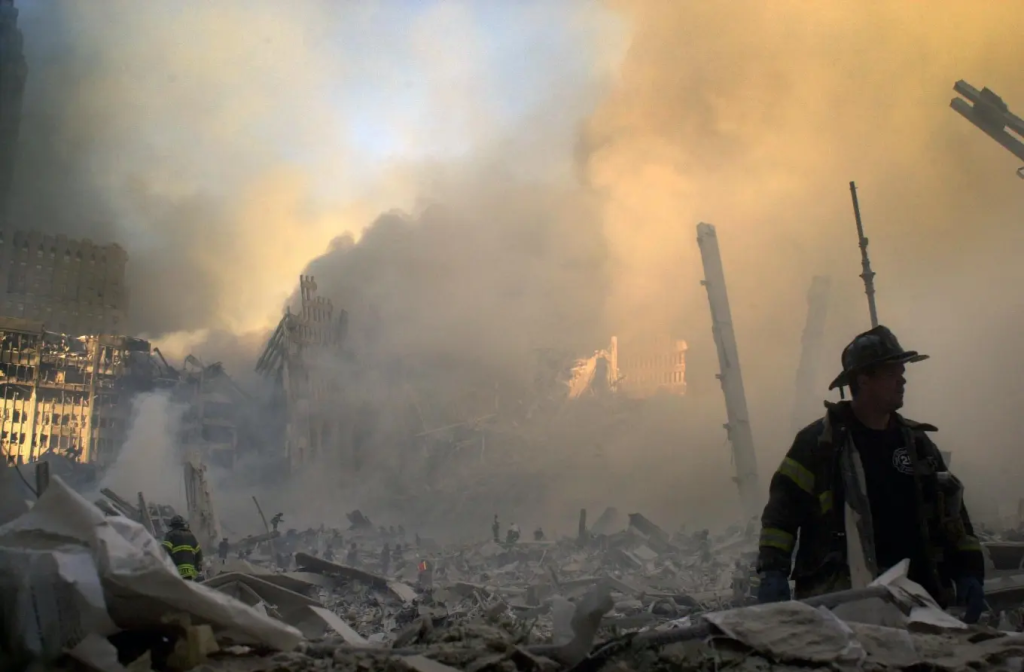
It’s not my job to make political statements, but I think we can agree that the killing of so many civilians unprovoked in peacetime was evil. Almost 3,000 were killed and 6,000 were injured. Almost everyone except terrorists condemns the killing of these 3,000, yet is the killing of the same number of innocent pre-born babies every day of the year equally condemned? 1,700 people succumb to cancer per day (when the annual numbers are equally divided by days in the year). Yes, some put themselves at risk by smoking and other unhealthy lifestyles, but many are struck for reasons not yet understood. Fatal auto accidents claim another 112 people per day. Both those causing the accident by substance abuse, violating the law, or a split-second bad choice, and those who are innocent die.
Tragedy, suffering, and death are part of the human condition. Death comes to each of us one day. Some of us will pass unexpectedly and suddenly; some of us after suffering illness. So how should we think about the death of others and our own death? Are we supposed to do anything about it? How do we process so much tragedy and suffering in the world?

The Bible has a lot to say about the human condition, including death. My mind goes to the Lord Jesus on his painful trudge to his place of execution. He had been condemned in a sham trial by those jealous of his following. Then a higher court had declared him innocent, but caved to pressure from a mob and let their will dictate instead of the law. He had been beaten beyond recognition and then was made to carry his own heavy, wooden cross until he collapsed from loss of blood and injuries, upon which a bystander was assigned to carry it. Although suffering terribly, he took time to look at the grieving women following him and address them.
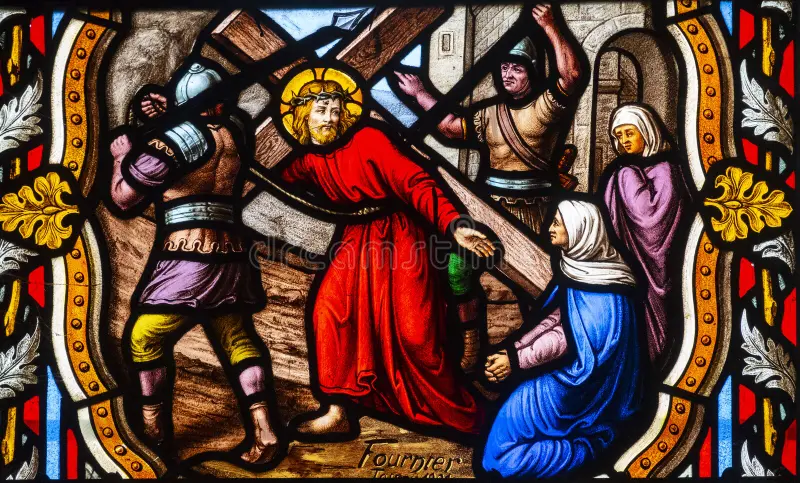
“A large crowd trailed behind, including many grief-stricken women. But Jesus turned and said to them, “Daughters of Jerusalem, don’t weep for me, but weep for yourselves and for your children. For the days are coming when they will say, ‘Fortunate indeed are the women who are childless, the wombs that have not borne a child and the breasts that have never nursed.’ People will beg the mountains, ‘Fall on us,’ and plead with the hills, ‘Bury us.’ For if these things are done when the tree is green, what will happen when it is dry?”Or If these things are done to me, the living tree, what will happen to you, the dry tree? Luke 23:27-31
It was appropriate for these women to mourn the taking of an innocent life. Expressing sorrow isn’t condemned in the Bible. So why did Jesus tell them not to weep for him? I think he was reminding them that although it’s appropriate for them to grieve over the taking of life, it was even more important for them to recognize that they, too, would face death. He wanted them to prepare beforehand by putting their faith in him, not just be caught up in an emotional moment and then forget him.
Just a few days prior, crowds had lauded him as the new king. Some were genuinely acknowledging allegiance to him because of his miracles and teachings. Others were curious, still others were caught up in the celebratory spectacle without a personal commitment to the teachings of this popular Rabbi. In the midst of the celebration, Jesus was brought to tears. Not tears of joy for his public acceptance, but tears for what was ahead for this city, the jewel of Israel, his own beloved people. He was deeply grieved, knowing that in less than 40 years, the Romans would crush the city, killing, capturing, or scattering the entire population. It would be almost 1900 years before Israel would again become a nation.
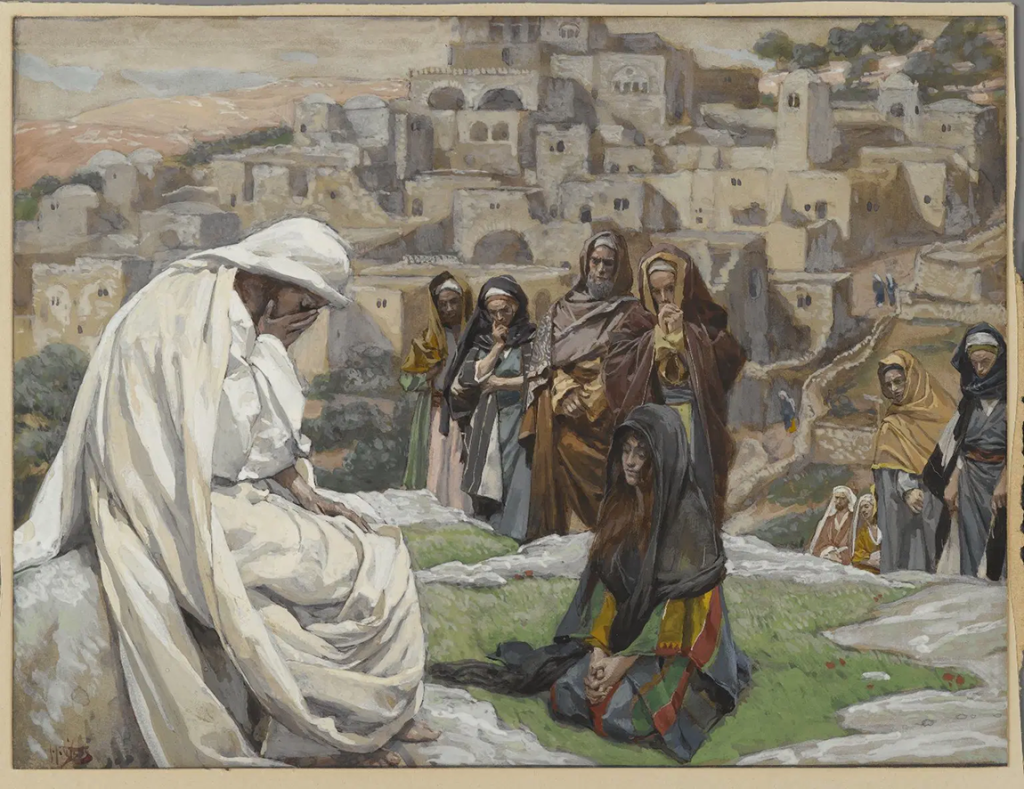
“But as he came closer to Jerusalem and saw the city ahead, he began to weep. “How I wish today that you of all people would understand the way to peace. But now it is too late, and peace is hidden from your eyes. Before long, your enemies will build ramparts against your walls and encircle you and close in on you from every side. They will crush you into the ground, and your children with you. Your enemies will not leave a single stone in place, because you did not recognize it when God visited you.” Luke 19:41-44
I was reading the prophet Jeremiah the other day and realized that Jesus cried for his people just as his Father had cried for his people in Jeremiah’s day when the people refused to repent, obey and love God. “But if you do not listen [to repent and obey], I will weep bitterly…”
“Hear and pay attention,
do not be arrogant,
for the Lord has spoken.
Give glory to the Lord your God
before he brings the darkness …
If you do not listen,
I will weep in secret
because of your pride;
my eyes will weep bitterly,
overflowing with tears,
because the Lord’s flock will be taken captive.” Jeremiah 13:15-17
Only days later, he had no tears for himself as he suffered, but his heart was torn for the people. They hadn’t recognized that he was God. The future would hold suffering and death for them and their children.
So what are we to learn? That we shouldn’t cry for innocent lives snuffed out? That we shouldn’t show emotion when faced with tragedies? No, emotion is a legitimate response. After all, Jesus told the sorrowful women to weep – for themselves and their children. But let’s make sure we are right with God through Jesus so that we can face our own death with faith and hope.
Being right with God makes all of life possible, through joy and tears. Having Jesus walking with us is the best and only way.
We were living in Portland and I was getting ready to go to work on the Concordia University campus. Jim had already gone to work. All classes were cancelled that day.
Yes, so true. Thanks, dear Anita, for always having helpful comments.