
Maybe you had a big idea, but your family just wasn’t on board. Or maybe a family member had a crazy idea, and you told them it just wasn’t going to fly for many reasons. Which one can you identify with?
It’s so easy to be dismissive of family members. We tend to see their faults and forget their strengths. They have a big dream, and we ridicule them. Maybe not out loud, but our inner thoughts belittle them. Our spouse has a big idea, but instead of listening and encouraging, all we can think about is the practical thing we want him to do instead of dreaming. Our young adult child has a dream for the next step, but we secretly (or not) ‘know’ they aren’t up for it. They don’t have what it would take to accomplish it. And it embarrasses us when they talk about it to others, assuming others will be think we raised a silly, impractical kid with a big head.
There’s a Bible story about a kid with a big idea, and it’s a brutal reminder to me not to respond as his family did. The hero of the story is one of the first Bible characters we teach our kids, David. We want them to follow his example of being brave and trusting God. But why do we adults sometimes fall into the trap David’s older brother fell into?
“Jesse’s [David’s father’s] three oldest sons had followed Saul to the war: The firstborn was Eliab; the second, Abinadab; and the third, Shammah. David was the youngest. The three oldest followed Saul, but David went back and forth from Saul to tend his father’s sheep at Bethlehem. . . David asked the men standing near him, “What will be done for the man who kills this Philistine [Goliath] and removes this disgrace from Israel? Who is this uncircumcised Philistine that he should defy the armies of the living God?”
“When Eliab, David’s oldest brother, heard him speaking with the men, he burned with anger at him and asked, “Why have you come down here? And with whom did you leave those few sheep in the wilderness? I know how conceited you are and how wicked your heart is; you came down only to watch the battle.” 1 Samuel 17: 13-15, 26, 28
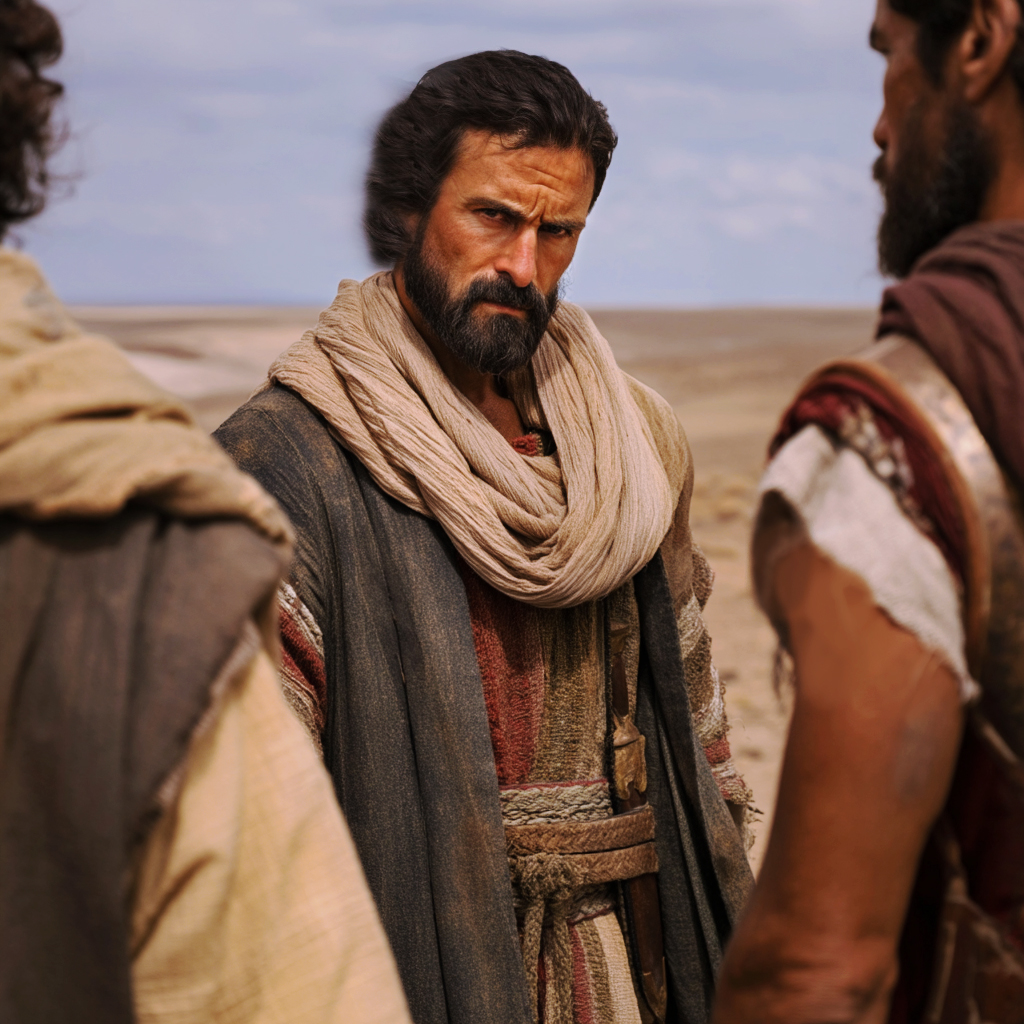
David’s oldest brother was very angry at him for asking about the reward for killing the giant. After all, here he was just a kid trying to be a hero. If the older, experienced fighters hadn’t been able to muster the courage to face the champion giant, who did he think he was?! Maybe the lad’s big talk pointed out the cowardice of the older men. Maybe Eliab was embarrassed by the brashness of his little brother. Maybe he was shamed by David’s faith and bravery compared to his own. Maybe he was insanely jealous of this little brother’s favored status shown him by the prophet Samuel’s anointing when it should have been his as the firstborn. Even though David had already proven himself brave and strong by killing wild animals, his brother treated him with contempt when he talked about a new exploit.

We say we want our family member to trust God even when there is a big job to do. But sometimes we question their abilities instead of encouraging them to try. Who do they think they are to attempt this big goal when others older and better equipped have failed?! “Why did you come down here?”
We point out what we think they should be doing instead of their big idea. Inferring that they are shirking their duties in order to pursue a dream. “And with whom did you leave those few sheep in the wilderness?”
We judge their character. “I know how conceited you are.”
We judge their heart, pretending we know their motives. And in taking on the role of God, the only righteous Judge, we condemn ourselves. “I know how wicked your heart is.”
We make ourselves the only ones who are doing the right thing. Although our family member might also be doing the responsible thing, we decide only we are doing the right thing. “You came down only to watch [us fight] the battle.”
We ignore or minimize the accomplishments of our ‘big idea’ spouse or child and cling to our own position.
When others listen to the big idea, we’re mad. We withheld the encouragement, but others gave it. “When Eliab, David’s oldest brother, heard him speaking with the men, he burned with anger at him.”
We accuse the ‘big idea’ person of having their head in a cloud, being unrealistic, and trying to attain something beyond their capabilities. But what if God has given them a vision beyond of our old, clouded view? What if God intends to use him in unusual ways? What if God’s power exceeds our perception of reality?

Here are my resolutions in view of this true story from Scripture:
~I’ll check myself for envy. Is this person with a big idea wanting to do something I aspired to and didn’t attain, so I’m throwing roadblocks in their path because I don’t want to be surpassed? Am I defending my favored status? Am I at the top of the hierarchy and don’t want to be supplanted by someone younger? (Grandparents can fall prey to this issue, too!)
~I’ll check myself for lack of faith. Do I have a negative reaction to this big idea because I don’t think God is big enough to overcome the obstacles and bless them with success in their endeavor?
~I’ll check myself for thinking the person with the big idea couldn’t be qualified to try, even though they have excellent past performance. Minimizing their accomplishments seems to make them less of a threat, but that shows my hard heart.
~I’ll check myself for concentrating on the practical reasons they shouldn’t attempt their big idea, while ignoring the spiritual reasons why they should.
~I’ll check myself for making assumptions about their motives. Instead of the worst explanation, ’They must be wanting to do that because they’re conceited and want attention.’ I should think, ‘What is the best case scenario as to why they want to do that? Maybe they see a need and are trying to meet it because they care about people.’
~I don’t want to bring up things I think they should do instead doing of the big idea. Maybe I’ve forgotten how responsible they’ve been in smaller things. Perhaps they are now ready to move on to bigger responsibilities.
~I don’t want to dismiss a person with a big idea because they’re young. God speaks to whomever he chooses and gives them assignments beyond their human capabilities so they depend on him. Samuel, David, and Timothy are examples.
And here’s a modern example of God speaking to a young person who proved faithful and now heads a ministry that is dedicated to: opposing Human Trafficking & Child Exploitation, Orphan Care & Prevention, Profound Medical Needs, and Special Needs Ministry. His influence has been felt around the world as he helps the most vulnerable.
“The inception of the vision that would eventually become the Tim Tebow Foundation came to Tim when he was just 15 years old, serving in the jungles of the Philippines. In a remote village, Tim met a boy named Sherwin, who was born with his feet on backwards. The day Tim met Sherwin, the feeling of a divine calling began to stir within him—one to serve the hurting, the marginalized, and those trapped in darkness, one to share the truth of the Gospel and the inherent value of being a child of God.

Among his people, Sherwin was seen as cursed, insignificant, and a throwaway. But when Tim met him, he felt God put it on his heart that Sherwin wasn’t a throwaway, but rather worthy of love and infinitely valuable. During his time there, and for long after he left the Philippines, Tim began to feel a tug at his heart to steer his life toward fighting for vulnerable boys and girls just like Sherwin. He felt a calling to love on and serve the Most Vulnerable People in the world.” https://timtebowfoundation.org/about